My Electrical Swan Song
Reflections on my time as the Chair of the IEEE Student Branch.
FEBRUARY 11, 2026
2023–2024
In early February 2024, I was sitting in a Computer Organization and Design lecture. It was wrapping up, and my professor, Dr. Abou El Nasr, asked if any of us would be interested in jumpstarting the IEEE Student Branch, as it had been inactive since COVID.
I was absolutely underqualified, more of an introvert, and worst of all, I had no idea about what I was doing. Despite this, I asked if I could take on a position. What resulted was one of the most interesting examples of the butterfly effect I have experienced in my entire life as I was quickly thrown into the role of Chair by the end of the month.
I made a LinkedIn post touching upon this topic after attending the IEEE CSYPC in September 2025, but I want to dive deeper into my experiences, and what my journey has been like since I plan to resign at the end of this school year to focus on my capstone.
Our first real contribution was at the Guelph Engineering Competition in 2024. We hosted the debate portion, and at the very end, I fumbled so, incredibly hard, and told the losing team they’d won. Easily recoverable, but at the same time, I had one job.
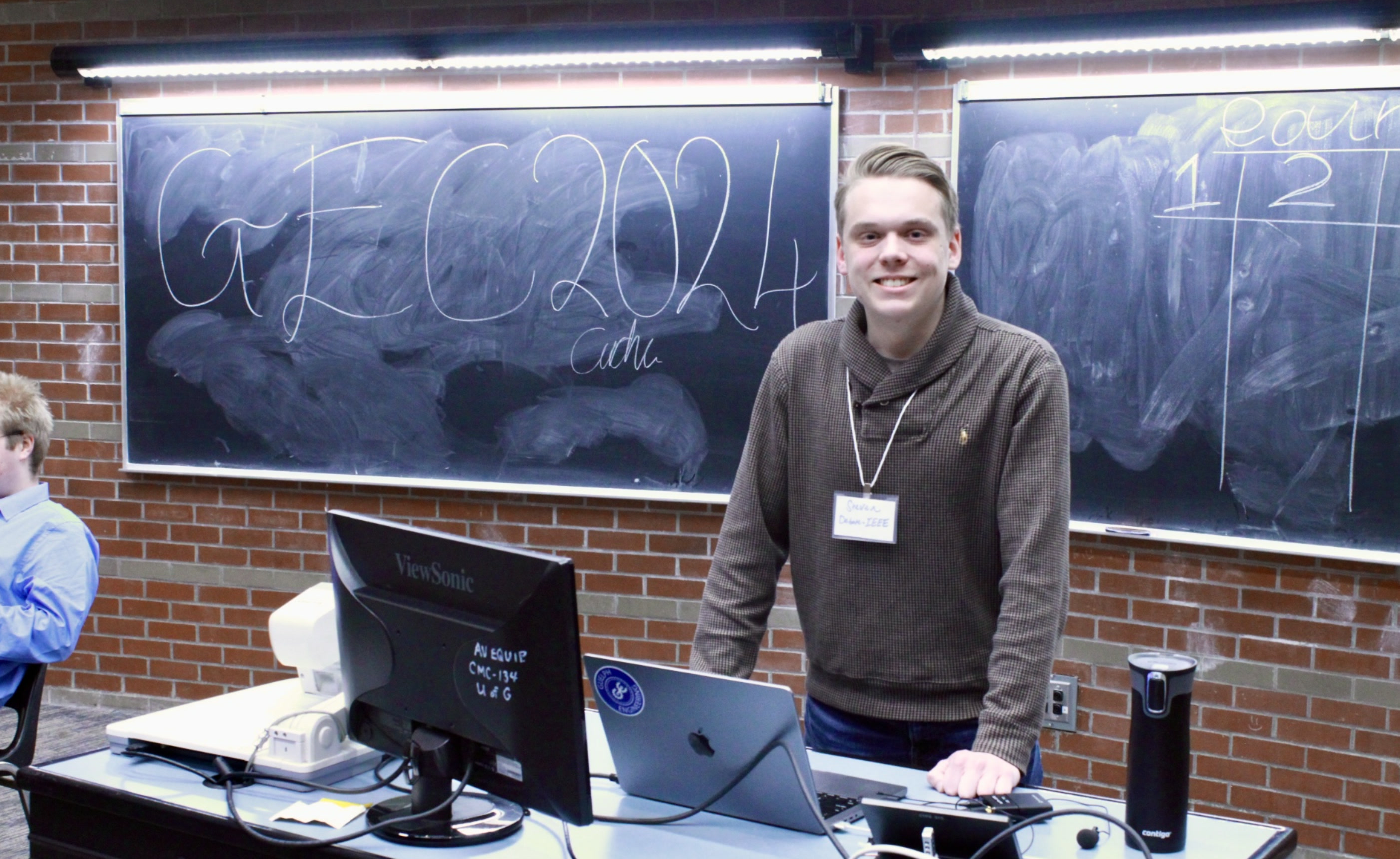
Me running the debate portion of the Guelph Engineering Competition in 2024.
This was one of those events where we really were just trying to get our name out there. It wasn’t necessarily related to the IEEE, but we needed to do something, and this was an easy way to participate in something low-stakes that mattered.
2024–2025
Around this time, we were working with the University of Guelph Robotics Team to develop a breadboard-to-PCB workshop. Our goal was to teach students about how components can make a circuit using a breadboard, which can then be transferred over to KiCad, and finally, soldered onto manufactured PCBs.
There was just one problem, though: I didn’t have a clue what I was doing in terms of circuit design.
The plan was to use a 9V battery to power a 555 timer, a binary counter, and a decoder, to cycle through eight LEDs. In retrospect, this was stupid for a number of reasons. The main reason, though, is that the 9V battery absolutely fried those binary counters and decoders. The 555 timer was rated for 16V, but the others rated for a maximum of 6V.
This resulted in inconsistent behaviour from the breadboards, and some of them just flat out did not work, or would light up and flicker in and out.
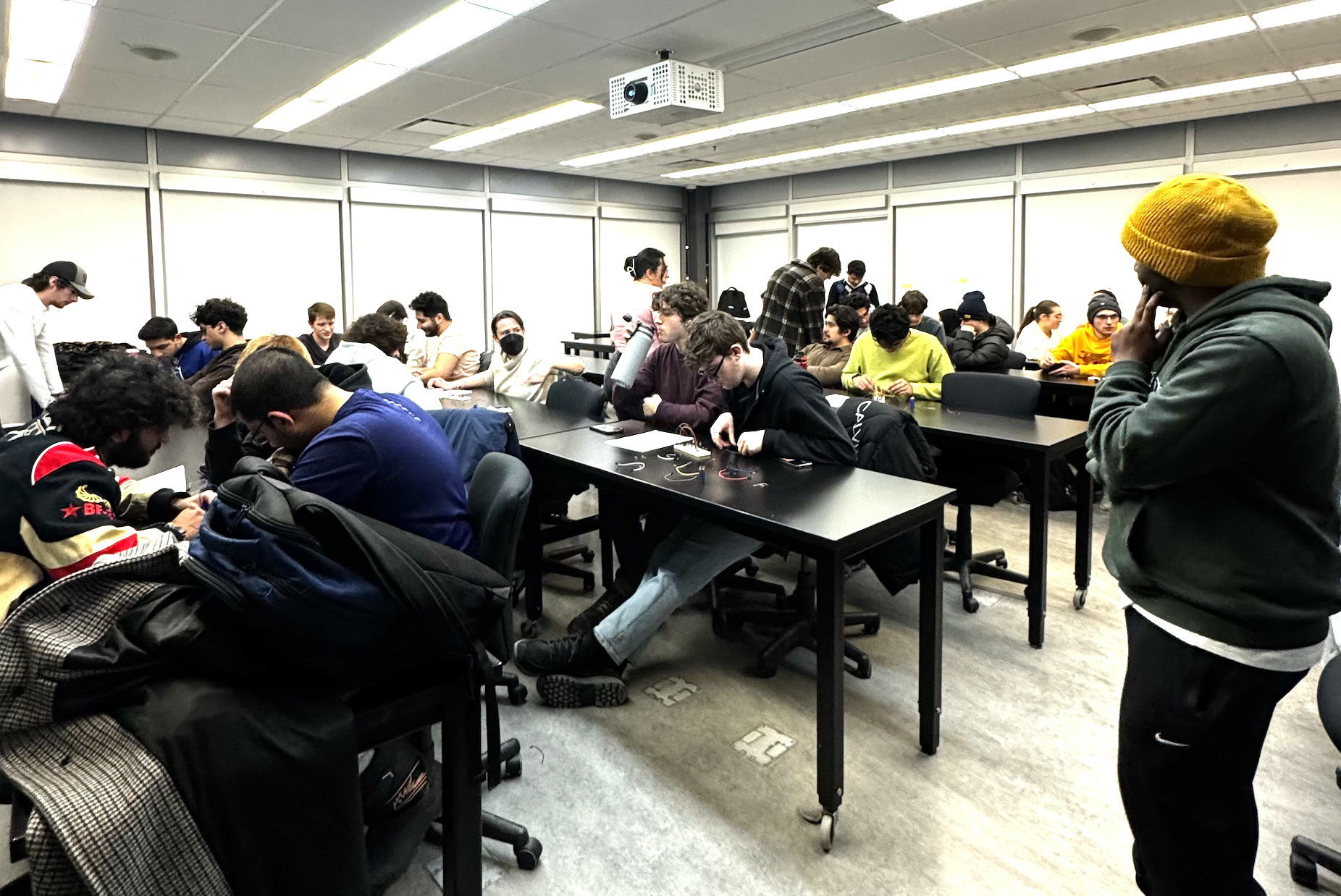
Our first breadboard workshop, hosted in early 2025.
When the time came for the soldering workshop, we had maybe five to ten people show up, which was less than we were expecting. Despite this, the people who were there seemed to enjoy it. Only one person’s circuit worked. I quite honestly don’t even know how that happened, but I have also resolved not to question it after doing the post-mortem to understand why the circuits didn’t work.
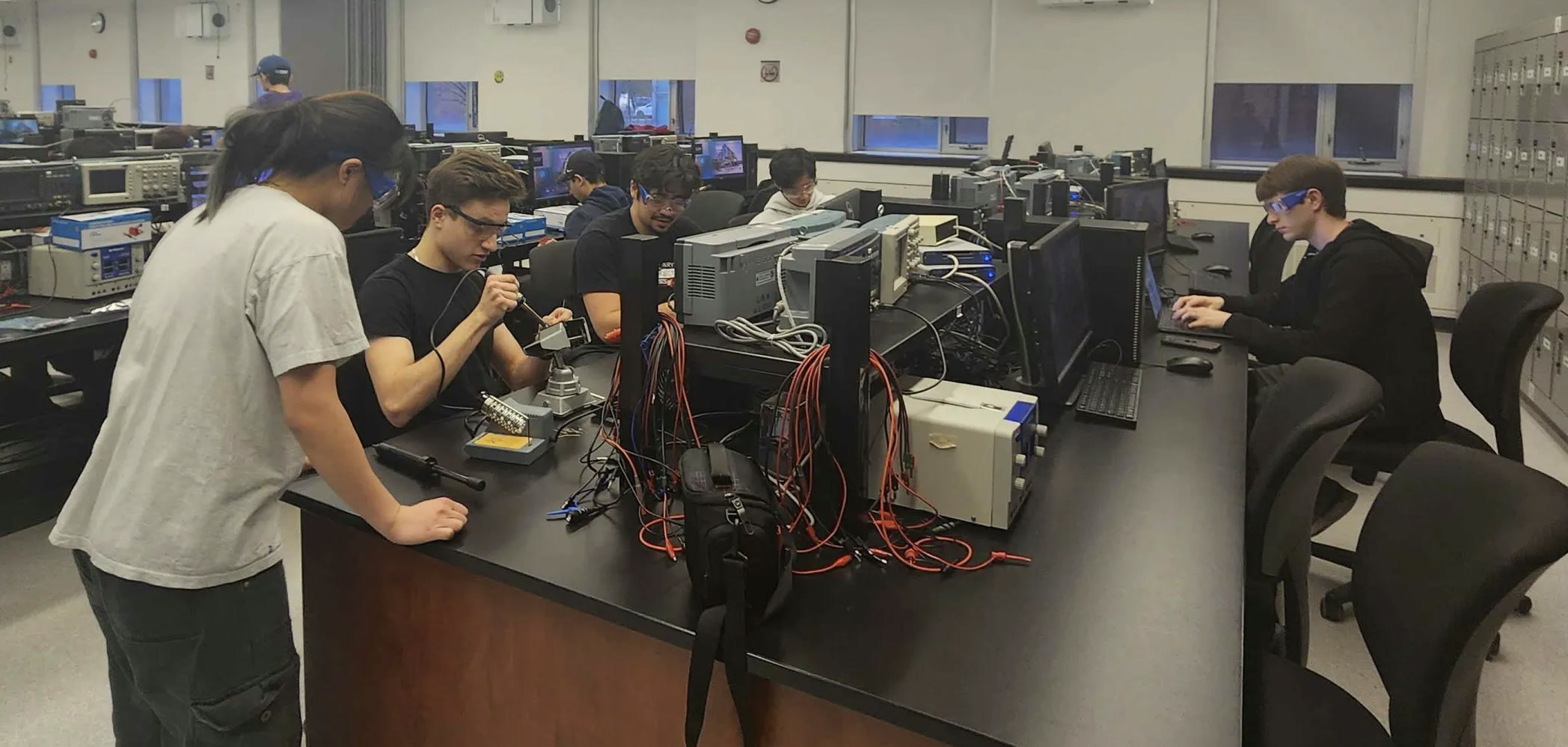
Our first soldering workshop, also hosted in early 2025.
So, there were quite a few lessons learned there. Some of them include: do your research on topics instead of just going in blind, verify that items work before running an event based around them, and think through things.
At this point, I wasn’t deterred. I was determined to do better. I made a lot of mistakes in my first year as Chair. We also had students who weren’t just my friends that were interested in applying for an executive position on our IEEE Student Branch by the time summer rolled around, so I got to hear some fresh perspectives as we went into our current year.
2025–2026
For Orientation Week this year, we ran a workshop based around an autonomous vehicle with a 3D-printed chassis and an Arduino connected to a motor driver. This presented a fun challenge to students. There were a few hiccups, but nothing earth-shattering. The event was very successful overall.
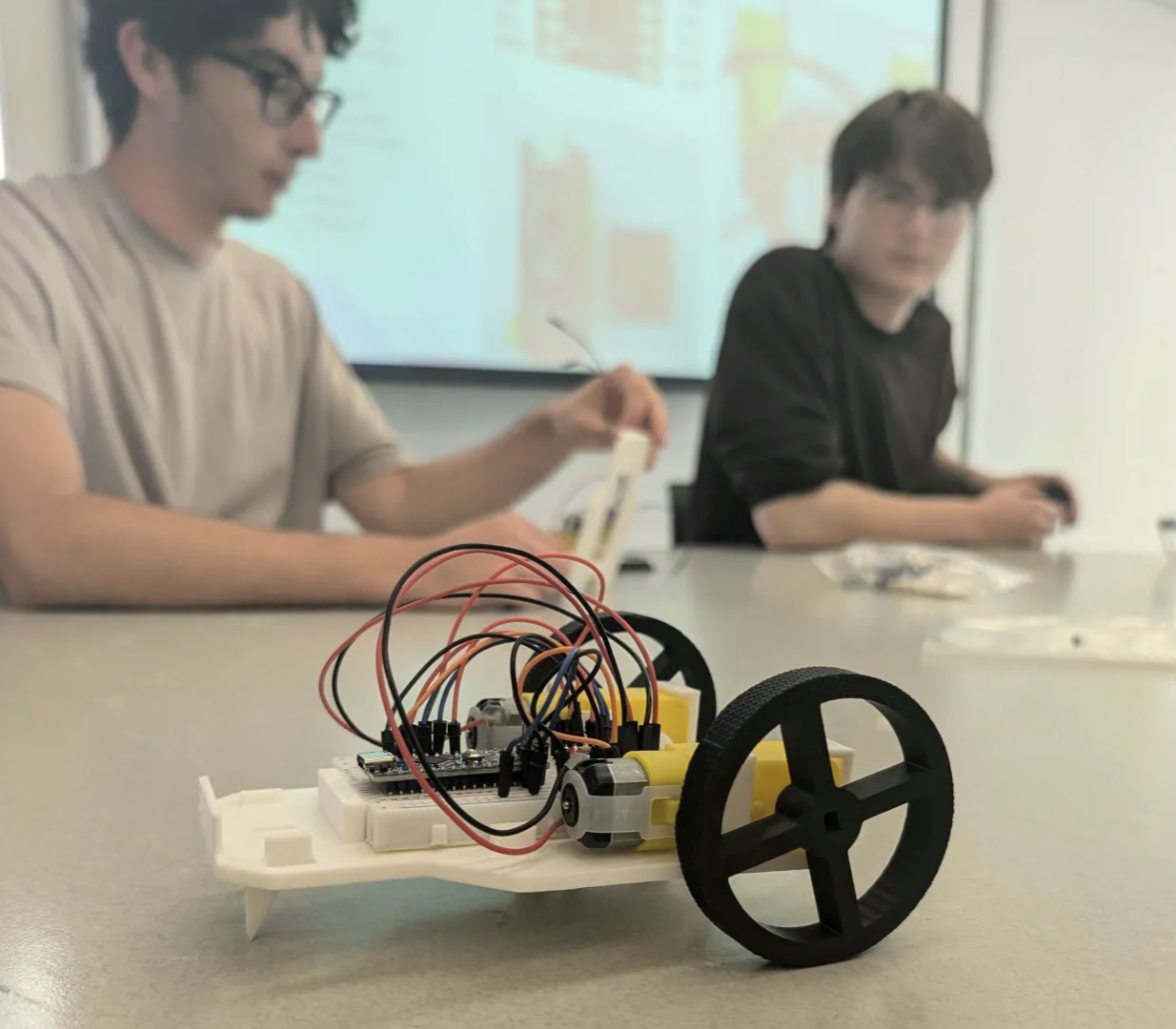
The autonomous vehicle in question.
Right after this, I attended the IEEE Canadian Students and Young Professionals Congress in Toronto. This was eye-opening for me. I got to network and meet a lot of students from across Canada. It made me realize that what I was doing in Guelph was a part of something larger. I got to hear how other student branches ran, and how I could do better. It was also really nice to meet new people and network with others that shared the same passions and interests as me.
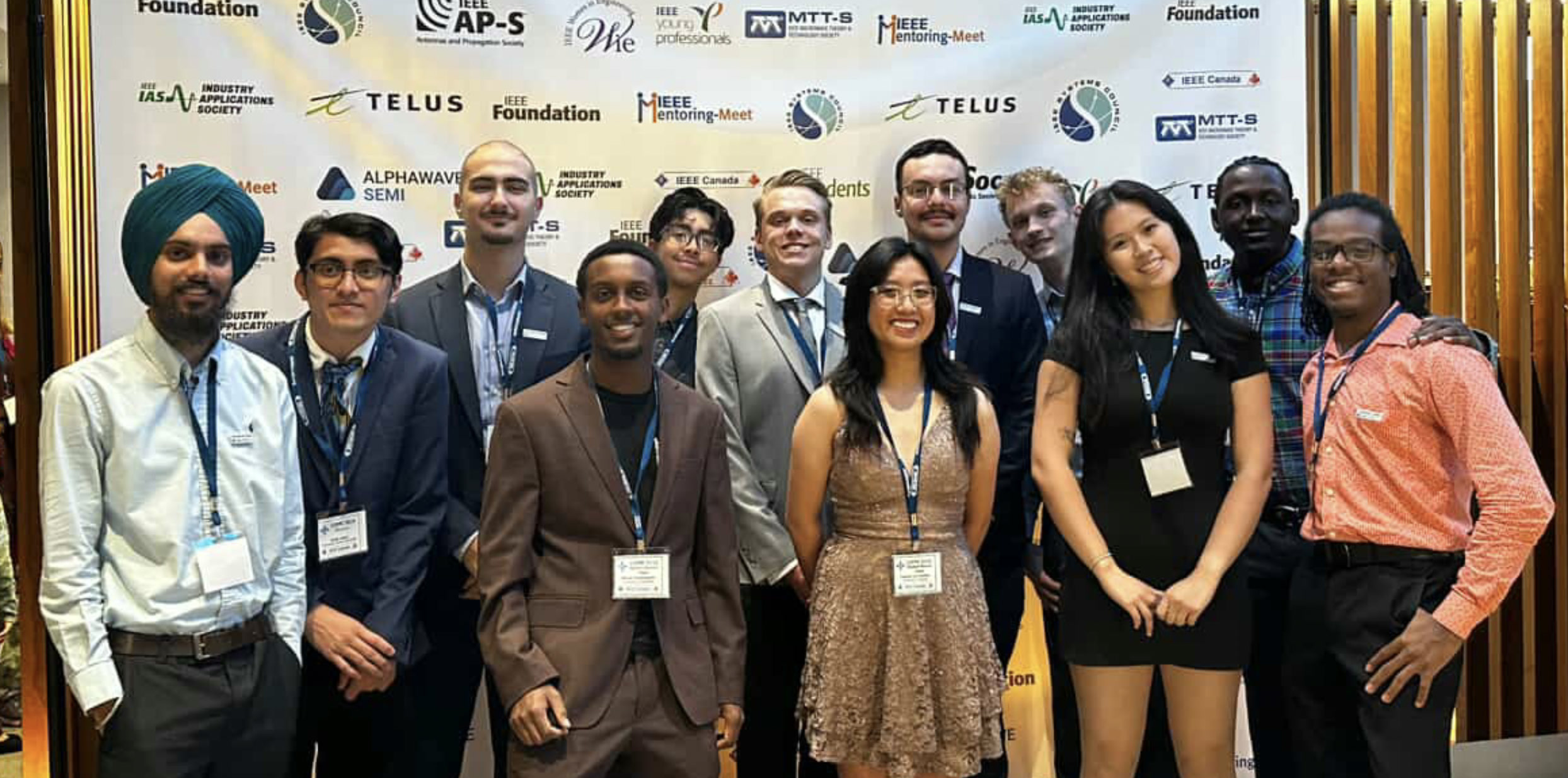
Our group at the IEEE CSYPC 2025.
The Fall 2025 semester was slow for me, as we were mostly in the planning phase. My now co-chair, Elijah, really stepped up while I was focusing more on my studies. He ran a great Resume Roast, among many other things he did to help pick up the slack.
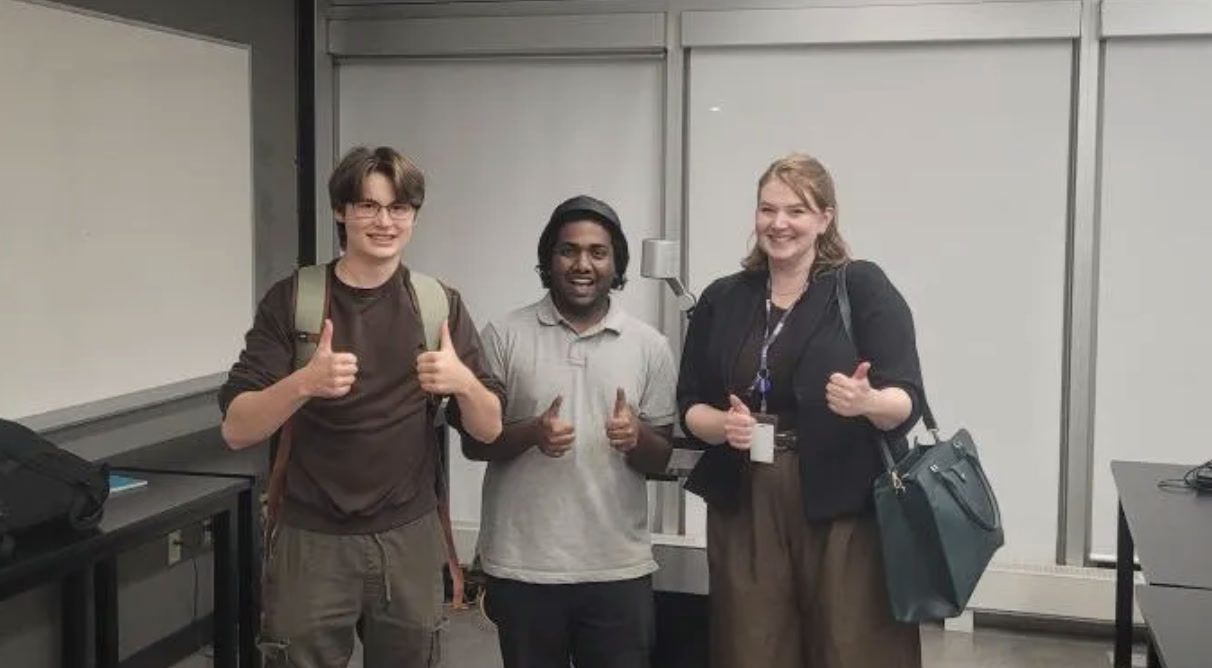
From left to right: Kyle, Elijah, and our guest speaker from ATS Life Sciences Systems, Katherine Topping.
Once winter break was upon us, I took that time to work on our circuit board workshop. I had discussed it with the Robotics Team earlier, and we immediately went into planning mode. This time, we wanted to make it Valentine’s Day-themed.
I used the lessons we had learned from the previous workshop, and designed a PCB that used an ATtiny85 with shift registers instead of a much more complex circuit with more points of failure.
This allowed us to customize the patterns on the PCB instead of just having it go around in a circle, and it acted like a black box. Students didn’t need to know how it worked. They just needed to know how to solder.
The breadboard workshop went off without a hitch, and prepared us well for the second event. Students were initially disappointed that they didn’t get to learn how to use KiCad, but we promised to make up for it at the soldering workshop.
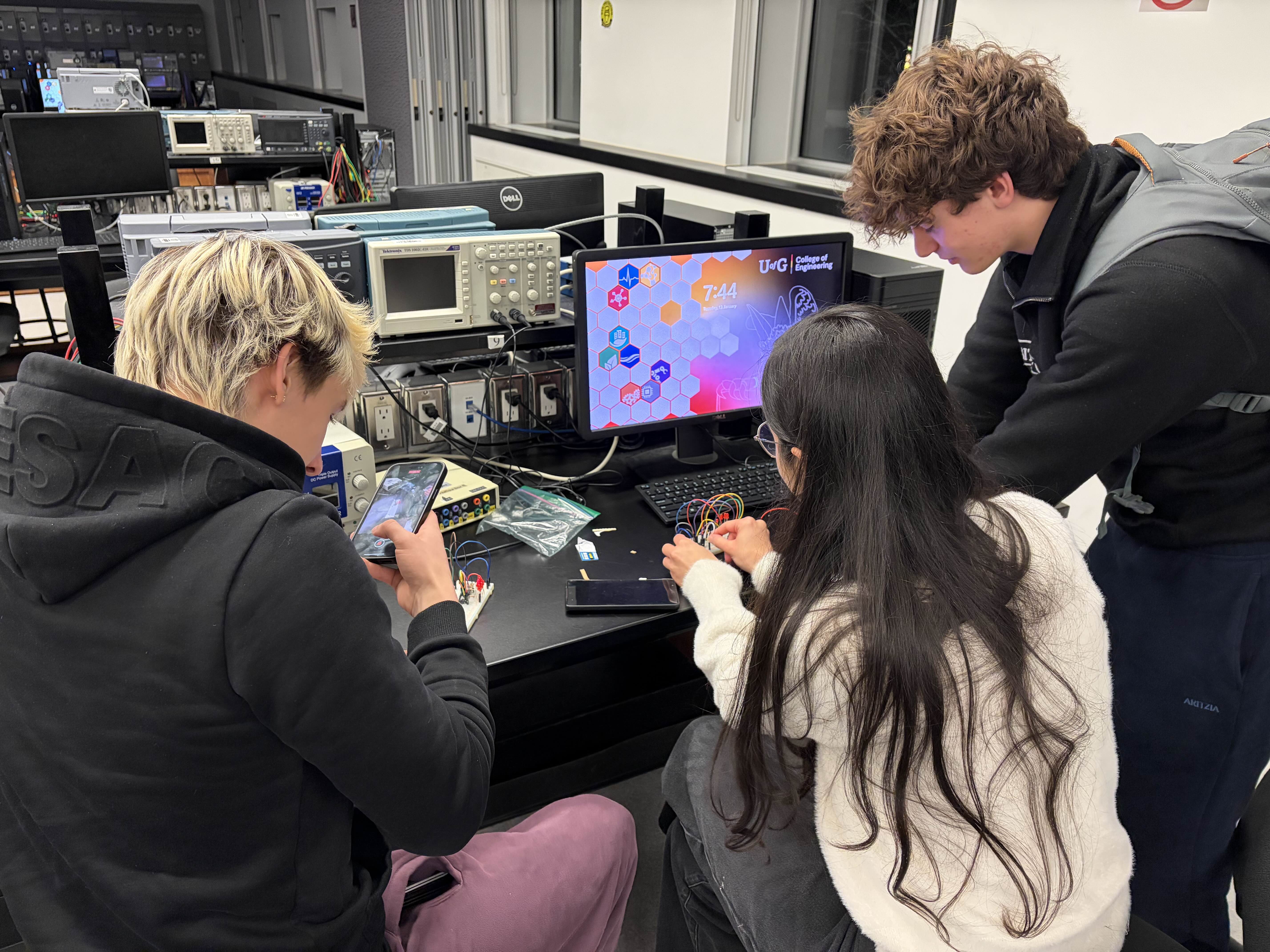
Students working on the circuit presented at our breadboarding workshop in early January.
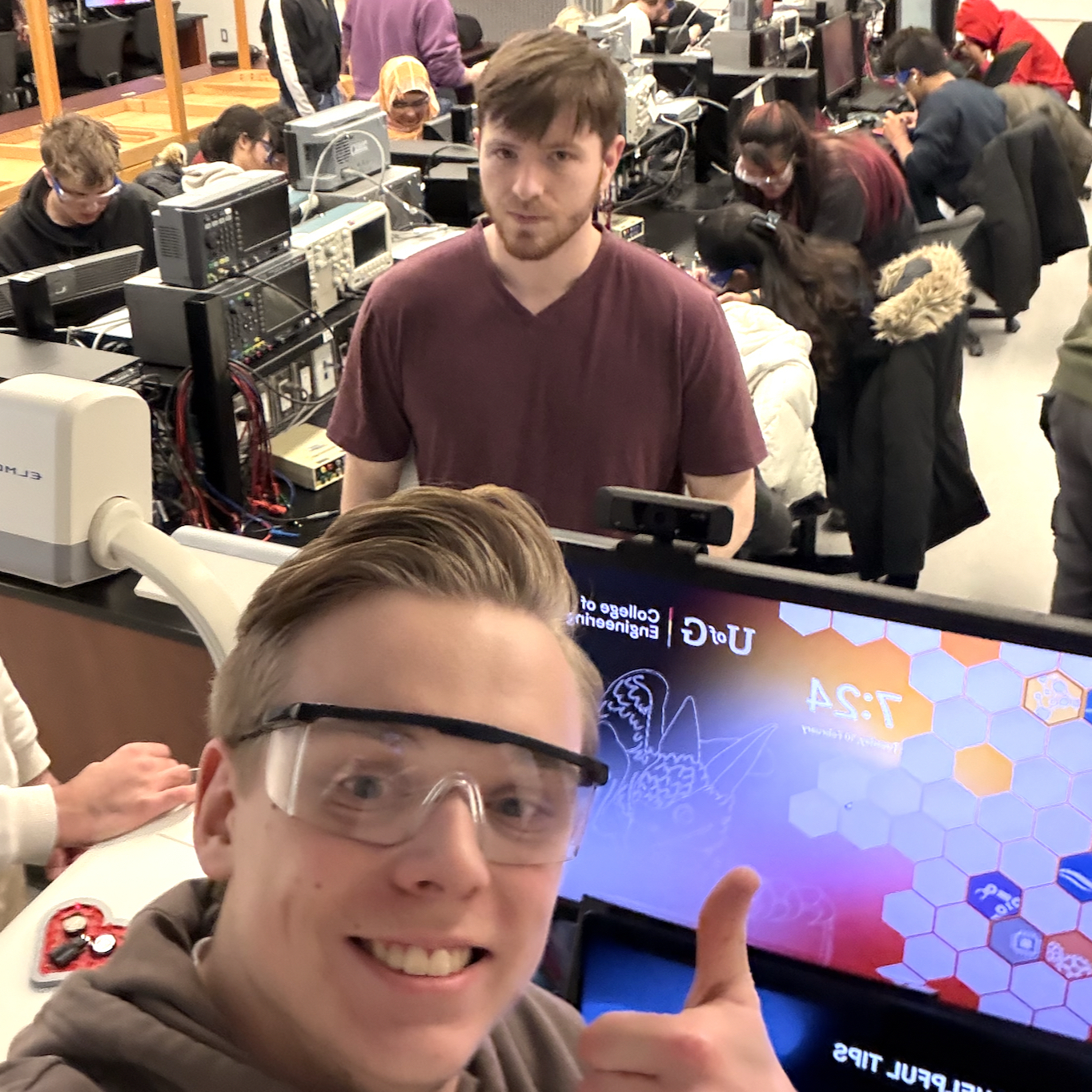
Yesterday, after much preparation and anticipation, we hosted the soldering workshop. The turnout this year was significantly better than last year. Students were interested in what we were doing, and it was at this specific moment, captured below, that I realized how energized I felt. As I spoke, I knew the others were listening, and that they were there because they wanted to be.
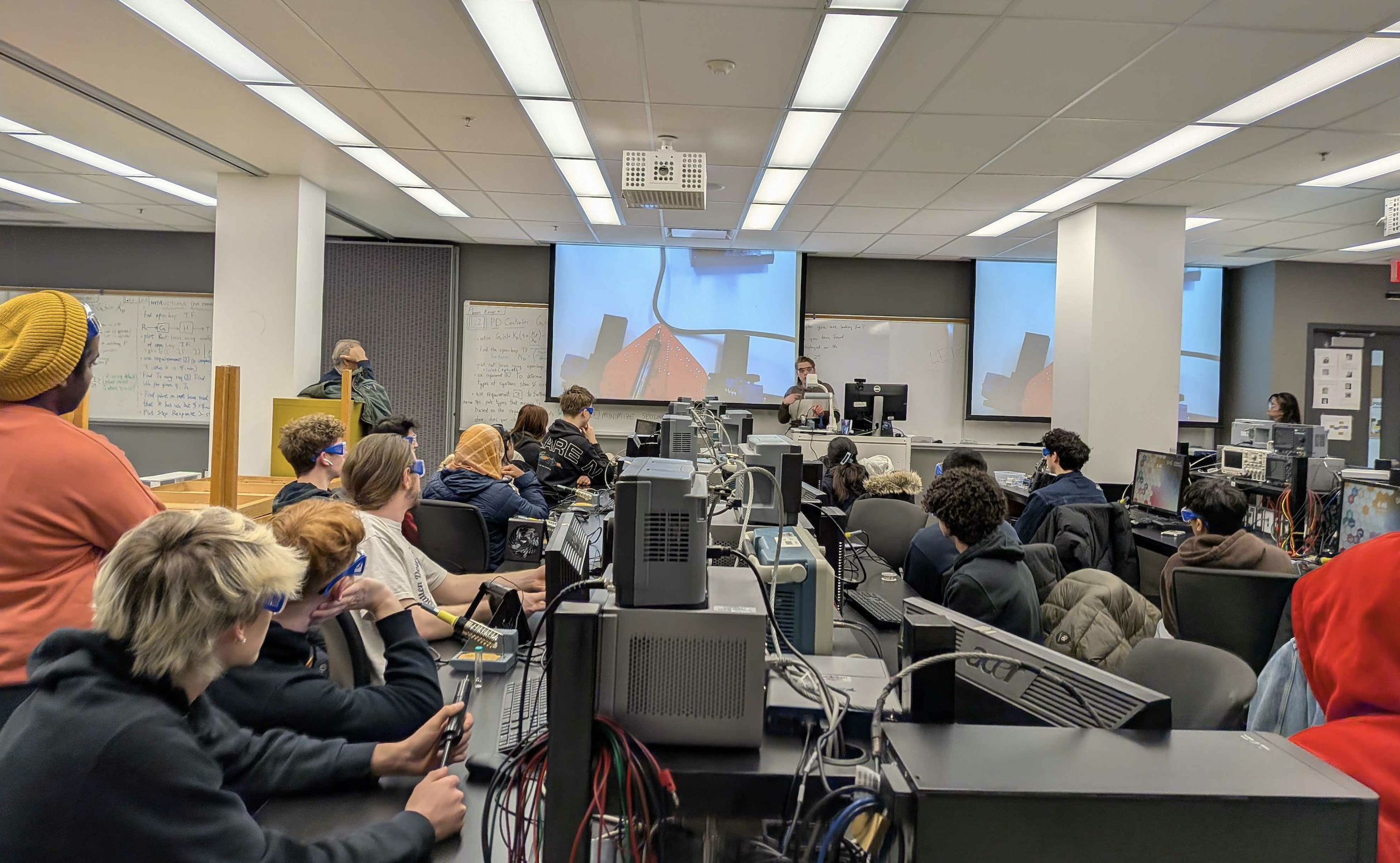
Me showing the students at our session how to solder at yesterday's soldering workshop.
As groups finished the soldering workshop, I went around to see what they thought of the event. Every student I talked to really enjoyed the workshop, and as a result, I knew this was all worth it, and that I had succeeded.
When I brought the IEEE Student Branch back to life originally, I went in with the goal to motivate students interested in the electrical side of computer engineering to pursue those passions further. In those moments, hearing how much students enjoyed our event and wanted to get involved with what we were doing, I felt pride. Pride in my team. Pride in those who helped make this event run smoothly. Pride in myself and how far I have come over the past two years.
When I first started the IEEE Student Branch, I was much more introverted. Even in recent months, I used to believe I was more of an introvert at heart, but I don’t think that’s true anymore.
If there is anything to take away from this article, it’s to take risks. You never know where it’s going to lead you. I don’t think February 2024 me would believe you if you told him about who I am today.
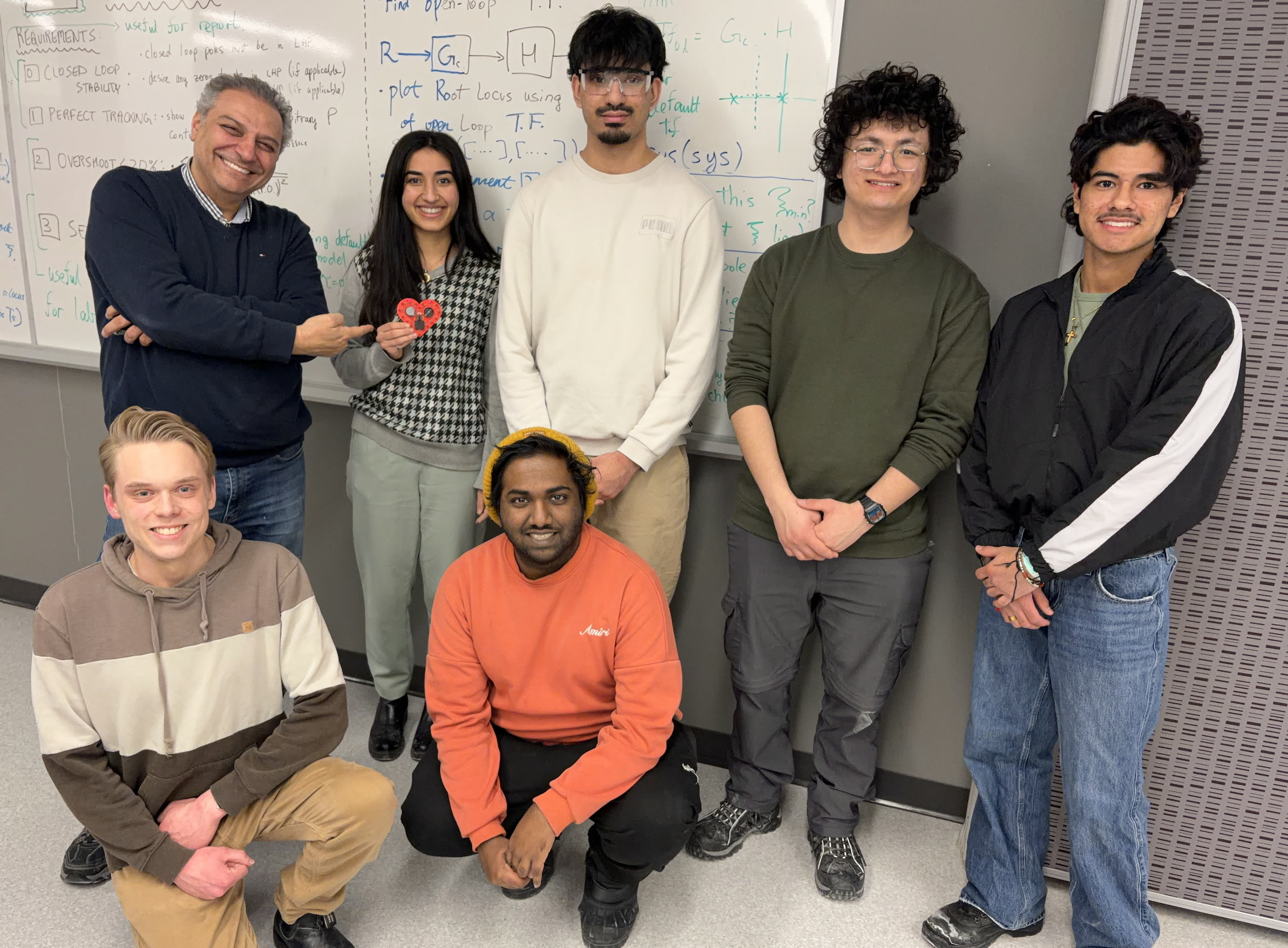
My incredible team this semester, excluding a few who had to leave early or who unfortunately couldn't make it.
This soldering event was my swan song, and the IEEE Student Branch in its current form is my love letter to the field of electrical and computer engineering. What may seem like a simple soldering event on the surface holds so much more meaning for me. It is the culmination of all I wished to achieve when I first started in this role, and I could not be more proud of myself and my team.